
Provision for Void check rule
-
Is there a rule that checks if, Every pipe or duct that is going through a wall, must have a provision for Void element?
-
Hey Jim,
yes there is. The order of the cascaded ruleset stays the same. Just take the components, which don’t collide with a provision for void to the next check (elements which passed the first rule = no collision with a provision for void). If a collision with a wall is detected you know that there is a void missing.
Here you see the cascaded ruleset:

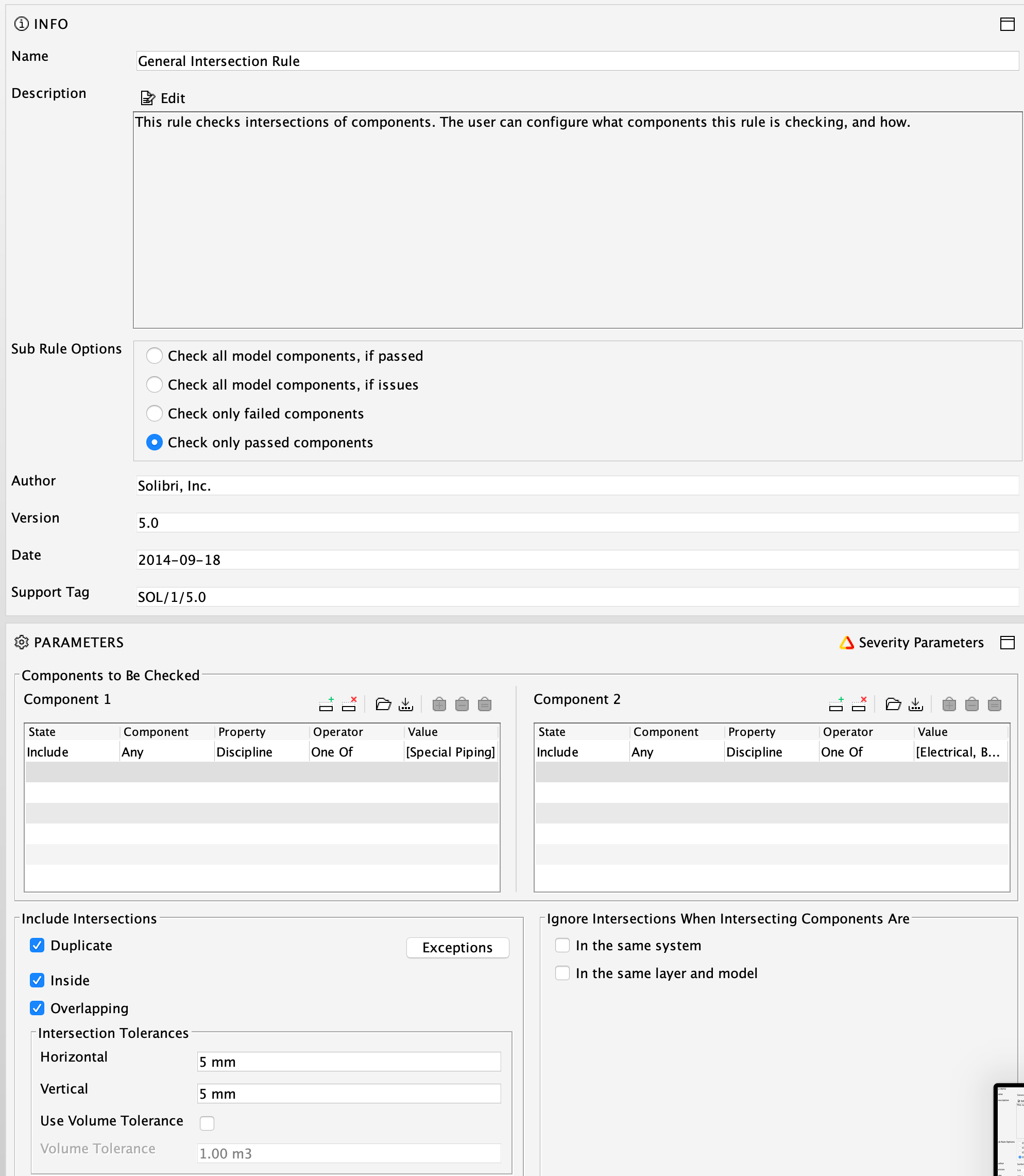
Here are the settings for the first step. The elements in the component 1 filter are your voids, elements in the component 2 filter your pipes, etc.:
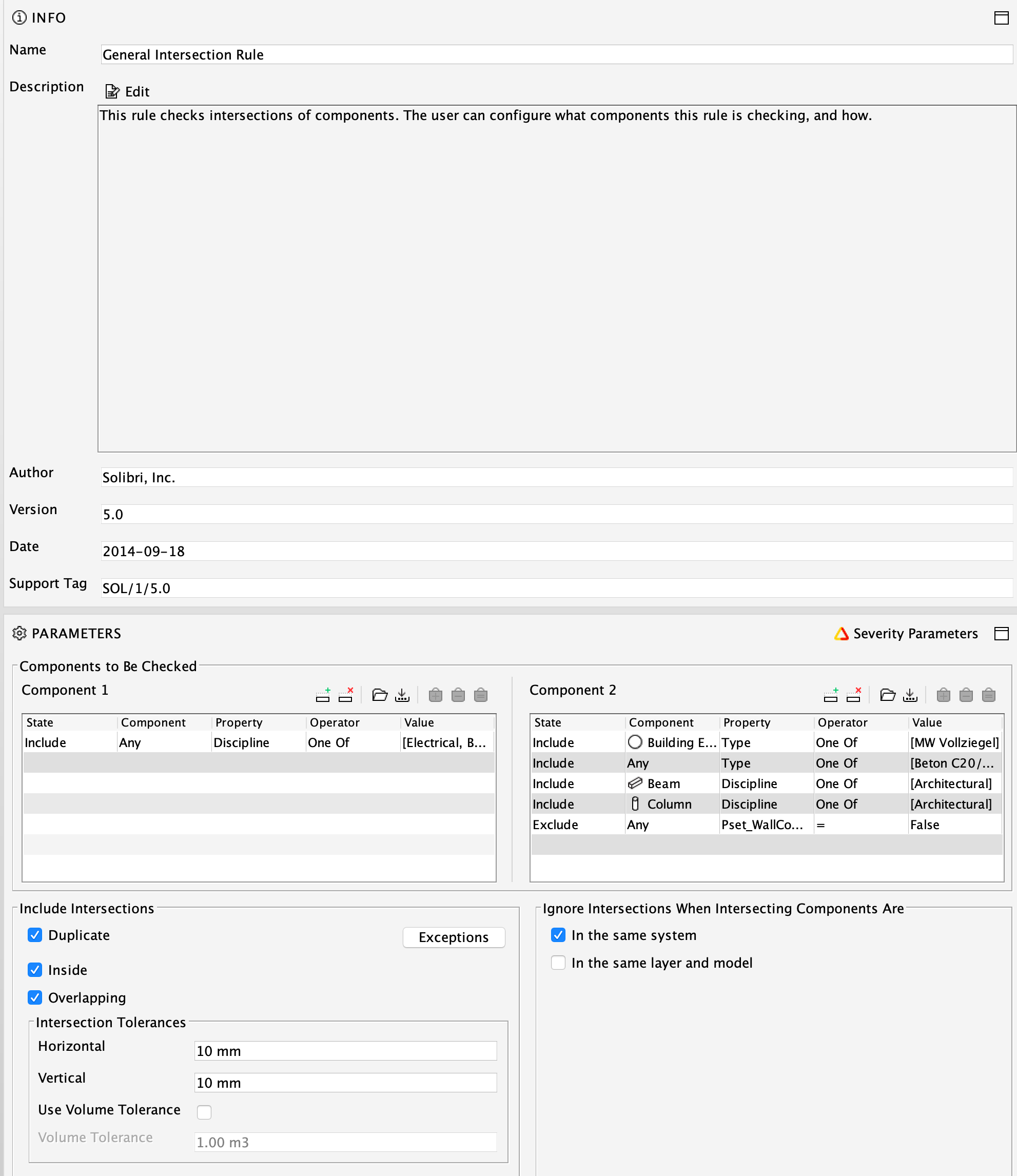
And the settings for the second step of the cascade. Elements of the component 1 filter are the pipes etc. which passed the first cascade, elements of the component 2 filter the parts of the structural or architectural model you want to check for collisions:
-
Hi Anees,
I use self-configuring rules.
1: Check, if Ducts/Pipes/etc. collide with a provision for void element
2. check only the elements which do not collide with provision for voids if they collide with walls etc.Works ok for me. It does not give the right results e.g. if an element collides both with provision for void and at a different position of the model with a wall.
-
I also use this rule:
- Check if a pipe is colliding with a ProvisionForVoid Proxy. All positive results should be taken to the next check
- Check if pipe is colliding with a concrete element
I devide these into Walls and Slabs, to have a better understanding.
You can achieve this only with a cascaded ruleset. One rule won’t do the job
-
Is there a possibility to turn the rule the other way and get results where the compnent is colliding with a wall and missing a Provisionforvoid object?
-
@Jim-persson that was exactly my question, anyway, I couldn’t get the solutions mentioned above to be working yet. I will post the results as soon as I get a working solution.
-
Hey Jim,
yes there is. The order of the cascaded ruleset stays the same. Just take the components, which don’t collide with a provision for void to the next check (elements which passed the first rule = no collision with a provision for void). If a collision with a wall is detected you know that there is a void missing.
Here you see the cascaded ruleset:
Here are the settings for the first step. The elements in the component 1 filter are your voids, elements in the component 2 filter your pipes, etc.:
And the settings for the second step of the cascade. Elements of the component 1 filter are the pipes etc. which passed the first cascade, elements of the component 2 filter the parts of the structural or architectural model you want to check for collisions:
-
Perfect
 thank you for a quick reply
 -
G GuillermoC referenced this topic on



Copyright © 2025 Solibri Inc. | Powered by NodeBB